
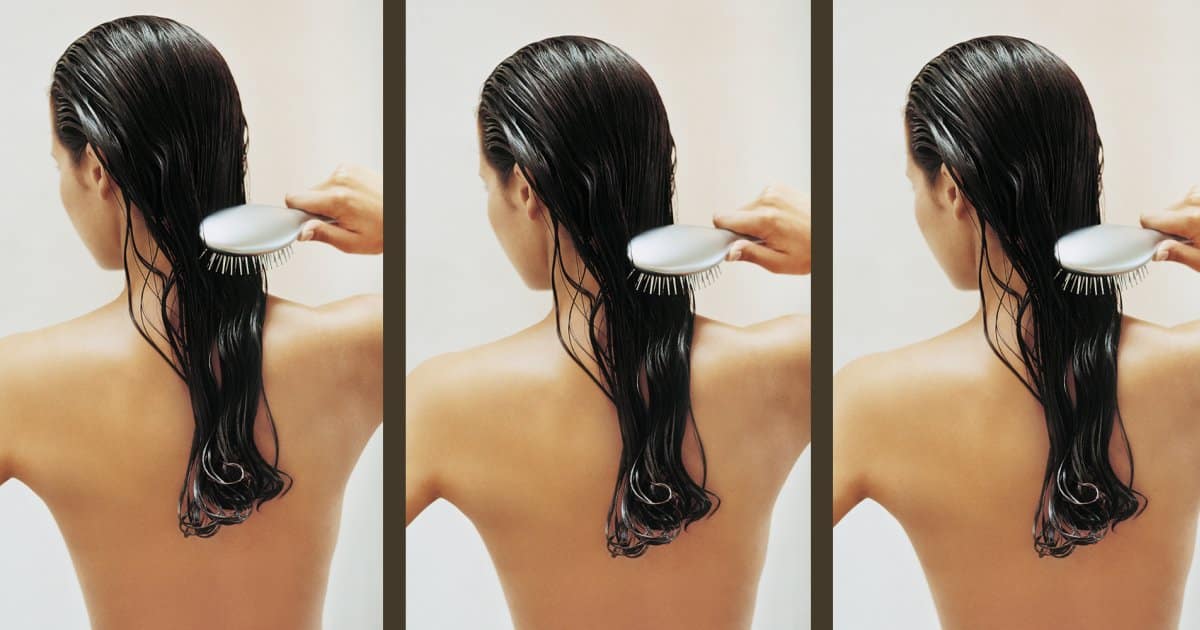
Brushing your hair when it's wet is one of those everyday habits that trichologists consistently flag as a major source of breakage. The answer isn't a simple yes or no — it depends almost entirely on your hair type, and getting it wrong can cause lasting damage to your strands.
Most people step out of the shower and reach for a brush without a second thought. But wet hair behaves in a fundamentally different way from dry hair, and the distinction matters more than most beauty routines acknowledge.
Wet hair is your hair at its most vulnerable
Trichologist and hairdresser Shab Reslan, quoted by Brydie, is direct on this point: wet hair is in its most fragile state. When hair absorbs water, the shaft swells, the cuticle lifts, and the internal bonds that give each strand its strength temporarily weaken. Any mechanical force applied in this state — pulling, tugging, dragging a brush from root to tip — creates traction that the hair simply cannot withstand the way it could when dry.
Cosmetic chemist Amoudax (@amoudaxtiktok) took this further with a TikTok video showing microscopic images of wet hair that had been brushed without conditioner. The visual evidence was striking: the level of breakage was dramatically higher than what occurs when hair is properly prepared before brushing. Those microscope shots made a compelling case for a step many people skip entirely.
The science behind the damage
The core issue is elasticity under stress. Dry hair, while it can still break, is at its most resistant and compact. Wet hair stretches rather than holds its structure, and when it's stretched beyond its limit, it snaps. The result is split ends, mid-shaft breakage, and over time, visibly thinner, weaker hair. Trichologist Angela Onuoha, speaking to The Cut, reinforces this: the combination of water and mechanical friction is a recipe for cumulative damage that builds up with every wash.
Brushing wet hair without conditioner significantly increases breakage — as demonstrated under a microscope by cosmetic chemist Amoudax. Always apply a conditioner or detangler before reaching for a brush on wet strands.
The right approach depends on your hair texture
Here's where the advice diverges, and where a blanket rule fails everyone. Hair texture changes everything about how and when you should brush.
Straight to wavy hair: brush dry, start at the ends
For straight and wavy hair types, the general recommendation from trichologists is to brush when the hair is dry. Dry hair in these textures is more compact and resistant, meaning the brush glides through with far less structural damage. The technique also matters: always begin at the tips and work progressively toward the roots, never the reverse. Starting at the roots and dragging downward forces knots and tangles to compound, multiplying the breakage points along the shaft.
If brushing after a shower is unavoidable — say, you need to detangle before styling — applying a conditioner beforehand is non-negotiable. The conditioner coats the cuticle, reduces friction, and allows the brush to move through the hair without snagging. This is also why the best haircut for your hair type matters: certain cuts are more forgiving of post-wash handling than others.
Curly, coily, and textured hair: wet brushing is the rule
Curly, coily, and textured hair follows the opposite logic entirely. For these hair types, brushing dry is actually the more damaging option. When curly hair dries without being brushed, the coils and spirals create numerous tension points at every curve and bend in the strand. Those bends become natural breakage points the moment a brush passes through.
Wet curly hair, by contrast, has softened and elongated coils with far fewer rupture points. The structure becomes more pliable, and a brush — ideally used with a leave-in conditioner or detangling product — can move through the hair with significantly less resistance. This is why the curly hair community has long championed wet detangling as standard practice, not an exception. If you're navigating hair care choices for textured or color-treated hair, understanding your texture's specific needs is the starting point for any good routine.
- You have curly, coily, or textured hair
- You always use a conditioner or detangler first
- You start from the tips and work upward
- You have straight or wavy hair
- You have no conditioner or detangler on hand
- You’re about to drag the brush from roots to ends
Brushing does more than detangle
Beyond the breakage debate, regular brushing serves real functions that are worth preserving — done correctly. The act of brushing distributes sebum, the natural oil produced by the scalp, along the length of the hair shaft. This gives hair a natural shine and helps protect it without any product. Brushing also stimulates the scalp, increasing blood circulation to the hair follicles. Better circulation supports the delivery of nutrients to the follicle, which in turn can support and even accelerate hair growth.
These benefits are real, but they only apply when brushing is done on appropriate hair — the right texture, in the right state, with the right technique. A rough brush session on fragile wet strands doesn't stimulate growth; it works against it by causing breakage that shortens the effective length of each strand over time.
For anyone looking to support their hair from root to tip, pairing good brushing habits with other smart practices makes a real difference. Knowing tricks to tie your hair without damaging it — especially on wet hair — is part of the same approach to reducing mechanical stress throughout the day.
The bottom line is that brushing wet hair isn't universally harmful or universally safe. It's a question of texture, preparation, and technique. Get those three variables right, and brushing becomes what it's supposed to be: a beneficial daily ritual rather than a source of damage.