Nail polish drying time varies from 60 seconds for quick-dry formulas to 24-48 hours for a full cure with traditional lacquers. The type of polish, room temperature, humidity, and application technique all play a role. Understanding these variables is the difference between a flawless manicure and a smudged disaster.
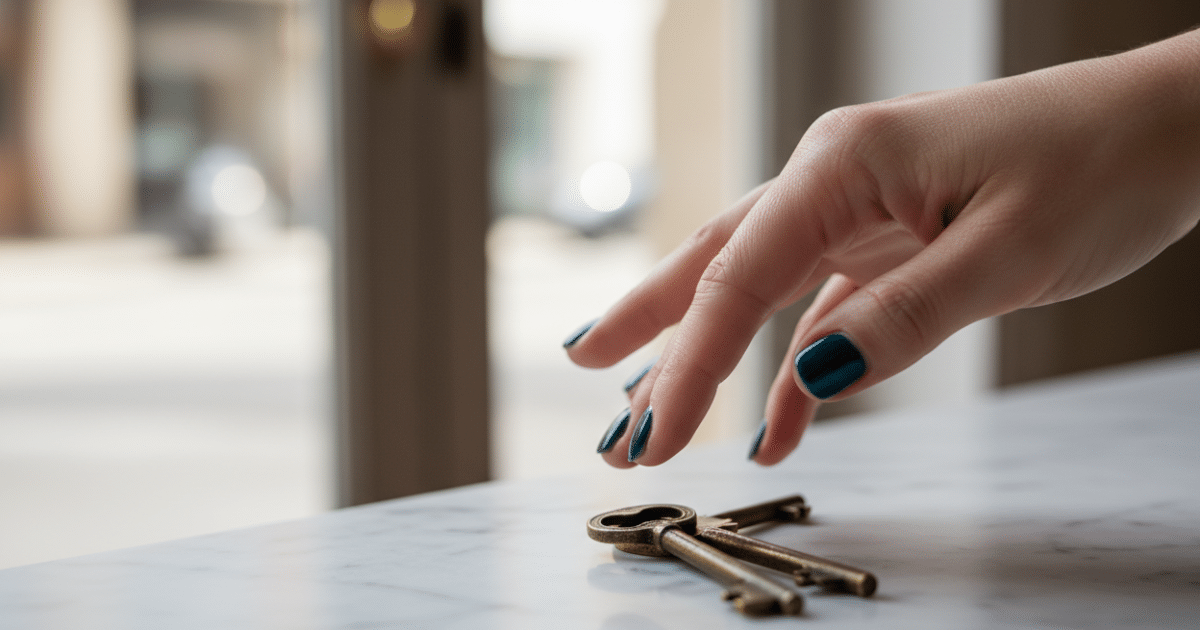
You're running late, your nails are freshly painted, and you're already calculating whether you can grab your keys without ruining everything. It's a scenario every nail polish wearer knows too well. The frustrating truth is that "dry to the touch" and "actually dry" are two very different things, and confusing them is responsible for more ruined manicures than any other mistake.
How long does it take nail polish to dry? The honest answer is: it depends. On the formula, on your environment, on how many coats you applied, and on what you do in the minutes after painting. This guide breaks down every factor so you can stop guessing and start getting consistent results.
Nail polish type determines your drying timeline
The formula in the bottle is the single biggest variable in drying time. Not all nail polishes are created equal, and treating a gel formula like a standard lacquer is a guaranteed path to frustration.
Traditional nail polish: patience is non-negotiable
Standard lacquer-based nail polish is the most common type and the slowest to dry. A single coat becomes touch-dry in roughly 60 to 90 seconds, but that surface dryness is deceptive. The solvents in the formula (primarily ethyl acetate and butyl acetate) need to fully evaporate for the polish to harden completely. That process takes 1 to 2 hours per coat for a hard set, and a full cure, where the polish reaches maximum hardness and durability, can take up to 24 hours.
Apply two coats plus a base and top coat, which is standard practice, and you're looking at a film that remains vulnerable to dents and smudges for several hours after application. The thicker each coat, the longer the evaporation process drags on.
Quick-dry formulas: faster, but not instant
Quick-dry nail polish reformulates the solvent ratio to accelerate evaporation. Brands like Sally Hansen and OPI offer dedicated fast-dry lines that reach a hard-enough surface in 5 to 10 minutes. But "hard enough" still isn't fully cured. Even with quick-dry polish, waiting 30 to 60 minutes before exposing your nails to water or pressure remains the smart call.
Quick-dry top coats work on a similar principle and can be applied over any standard lacquer to dramatically cut waiting time. They're one of the most effective tools in a time-pressed manicure routine.
Gel nail polish: a different process entirely
Gel polish doesn't dry through solvent evaporation at all. It cures through a photochemical reaction triggered by UV or LED light. Place your hand under an LED lamp for 30 to 60 seconds per coat, and the polish is fully hardened. A UV lamp takes slightly longer, typically 2 minutes per coat.
The practical advantage is significant: gel nails are genuinely hard and chip-resistant the moment they come out from under the lamp. There's no waiting period, no vulnerability window. The trade-off is the equipment required and the removal process, which involves acetone and time. But for drying speed and durability, gel is in a different category entirely.
Gel polish labeled “no-wipe” or “soak-off” still requires a UV or LED lamp to cure. No lamp means no cure — the formula will remain tacky indefinitely, regardless of how long you wait.
Environmental conditions that slow down (or speed up) drying
The room you paint your nails in matters more than most people realize. Temperature, humidity, and airflow all directly affect how quickly solvents evaporate from traditional and quick-dry formulas.
Temperature: the warmer, the faster
Solvent evaporation accelerates with heat. Painting your nails in a warm room (around 21-24°C / 70-75°F) noticeably shortens drying time compared to a cold bathroom in winter. Cold temperatures slow molecular movement, which means solvents linger in the polish film longer. Some nail enthusiasts swear by a brief session under a warm (not hot) lamp or near a gentle heat source, but direct heat like a hair dryer on its highest setting can actually cause bubbling in the polish surface.
The cold-water trick, where you dip freshly painted nails into a bowl of cold water, is a classic shortcut. It firms up the surface layer quickly by causing the top of the polish to contract, but it doesn't accelerate deep evaporation. The nails feel harder, but the interior of the film is still soft.
Humidity: the enemy of a fast manicure
High humidity is genuinely problematic for nail polish drying. Moisture in the air competes with the evaporation process and can cause the surface of the polish to dry unevenly, sometimes leading to a cloudy or streaky finish. If you live in a humid climate or paint your nails after a shower when the bathroom is still steamy, you're working against yourself. Waiting until the air has cleared, or moving to a drier room, makes a measurable difference.
Air conditioning helps. So does a small fan positioned to create gentle airflow across the nails without blowing directly at them at high speed, which risks introducing dust particles into wet polish.
Techniques to speed up nail polish drying
There are legitimate ways to cut drying time without sacrificing finish quality. Some are product-based, others are purely technique-driven.
Quick-dry drops and sprays
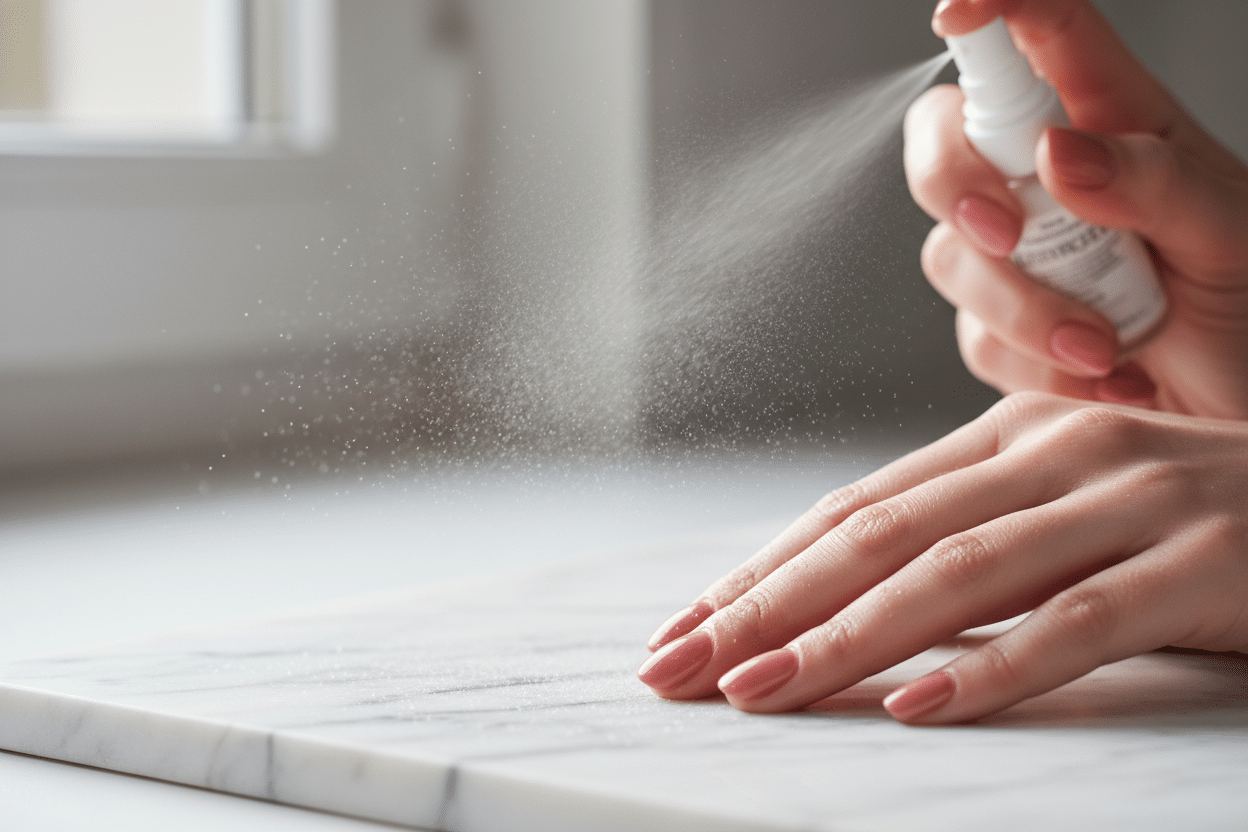
Nail drying drops, like the classic Seche Vite Dry Fast Top Coat or dedicated drying sprays, work by depositing a thin layer of fast-evaporating solvent over wet polish. They genuinely accelerate surface hardening and reduce the risk of smudging. Apply them about 90 seconds after your final coat, when the polish has had a moment to begin setting.
These products don't eliminate the full curing period, but they compress the most dangerous window, the first 10 to 15 minutes where the slightest contact can leave a mark, down to something far more manageable.
Thin coats: the single most effective technique
Thick coats of nail polish take dramatically longer to dry than thin ones. The solvent at the bottom of a thick coat has to migrate through the entire film to evaporate, and that's a slow process. Two thin coats will dry faster than one thick coat that delivers the same color payoff. This is the single most effective technique for reducing drying time, and it costs nothing.
A light mist of cold air
A hair dryer on its coolest setting, held at least 30 centimeters from the nails, provides gentle airflow that helps solvents evaporate without blowing the polish surface around. It's not the most glamorous solution, but it works. Keep the setting cool, not cold, and keep the dryer moving rather than aiming it at one spot.
Applying a base coat before your color isn’t just about nail protection — it creates a smoother surface that helps subsequent coats adhere and dry more evenly, reducing total drying time for the full manicure.
Common mistakes that extend drying time
Several widespread habits actively work against a fast, clean dry. Eliminating them doesn't require any new products, just a change in routine.
Applying coats too quickly
The most common mistake is layering coats before the previous one has had enough time to set. Each coat needs at least 2 minutes of surface drying before the next goes on. Stacking wet coats creates a thick, slow-drying film that also tends to peel and chip faster once it does finally harden. Patience between coats pays off in both speed and longevity.
Shaking the bottle instead of rolling it
Shaking a nail polish bottle introduces air bubbles into the formula. Those bubbles transfer to the nail surface and create tiny pockets that disrupt the film's integrity, leading to an uneven surface that dries inconsistently. Roll the bottle between your palms instead. It mixes the formula without aerating it.
Painting nails right after a shower or bath
Nails absorb water. After a shower, they're slightly swollen and the surface is softer, which means polish adhesion is weaker and drying is slower. Waiting at least 30 minutes after getting out of the water before painting gives nails time to return to their normal state. It's a small delay that prevents a much longer frustration later.
Using old or thickened polish
Polish that has thickened with age applies in uneven, heavy coats that take far longer to dry and are more prone to bubbling and streaking. A few drops of nail polish thinner (not acetone, which breaks down the formula) can restore the consistency. But if the polish has separated irreparably or smells strongly of solvent loss, replacing it is the better call.
Signs your nail polish isn't drying correctly and what to do
Sometimes polish simply doesn't behave the way it should, even when technique and environment seem fine. Recognizing the signs early prevents a lot of wasted time.
The surface stays tacky indefinitely
If your nail polish feels sticky or tacky well beyond the expected drying window, the likely culprits are a formula that's past its prime, too many thick coats applied too quickly, or excessive humidity in the room. A quick-dry top coat applied over the tacky surface can sometimes rescue the manicure by sealing the surface and accelerating evaporation. If it doesn't resolve within a few hours, removing the polish and starting over with a fresh formula in a better environment is the only real fix.
Dents appear hours after application
Dents forming long after you thought the polish was dry indicate that the deeper layers of the film haven't fully cured. This is almost always a result of thick coats or insufficient drying time between layers. The polish was dry on the surface but still soft underneath. Going forward, thinner coats and longer waits between them will prevent this. For the current manicure, a top coat can smooth over minor surface imperfections, but deep dents typically require removal.
Never try to fix a dented or smudged nail by adding more polish directly over the damage without smoothing the surface first. Layering over an uneven surface amplifies the problem and creates a thick spot that takes even longer to dry.
Polish peels off within a day
Rapid peeling isn't a drying problem per se, but it's often caused by the same underlying issues: oily nail surfaces before application, skipping the base coat, or painting over moisturizer residue. Nail polish needs a clean, slightly rough surface to grip. Wiping nails with a cotton pad dampened with rubbing alcohol immediately before painting removes oils and gives the base coat something to bond with. The result is a manicure that dries faster, adheres better, and lasts significantly longer.
Getting nail polish drying right is ultimately about understanding that it's a process, not a moment. The surface might be ready in minutes, but the full cure takes hours, and working within that reality, with the right formula, the right environment, and the right technique, is what separates a manicure that lasts from one that doesn't survive the first hour.