The smoky eye is one of the most iconic makeup looks of the past three decades, but it can quickly work against you on mature skin or drooping eyelids. Charly Salvator, makeup artist and TikTok creator, shares a 7-step method that transforms this classic technique into a genuine eye-lifting tool, without the dreaded panda effect.
The smoky eye has been a staple since the 1990s, worn by everyone from Bella Hadid to Zoë Kravitz and Emily Ratajkowski. But what works on a young, taut eyelid can do the opposite on a hooded or mature lid, dragging the gaze downward instead of opening it up. Charly Salvator, who shares his expertise on TikTok at @charlysalvator, has developed a precise, adapted approach that rethinks the placement and texture of every product involved.
The smoky eye challenge on mature and drooping eyelids
The core problem with a classic smoky eye on hooded or aging eyes is simple: the technique was designed for prominent, mobile lids with plenty of visible surface. When the skin above the crease begins to fall, or when the lid loses its elasticity over time, the same gestures produce very different results.
Why the standard technique fails
Applying dark shadow evenly across the lid, as most tutorials suggest, tends to close the eye visually. The darkness sits on top of the fold and disappears when the eye is open. Worse, if product migrates below the lower lash line, you get the classic panda effect, with dark circles that age the face rather than dramatizing the look. The goal, according to Salvator, is to concentrate intensity exactly where it will remain visible and to pull every material upward, not outward.
Cream textures as the secret weapon for mature skin
One of the most significant adjustments Salvator recommends is choosing cream textures over powder formulas. On mature skin, powder shadows can settle into fine lines and ridules, accentuating them rather than hiding them. Cream formulas blend more smoothly, adhere better to the lid, and are far less likely to crease or emphasize texture. The six products he uses in his tutorial include a neutral cream beige shadow, a cream brown shadow, a dark pencil, a black pencil, a brown eyeshadow for gradient work, and a light beige shadow for highlighting. Each product has a specific placement logic, and none of them are applied randomly.
A 7-step technique built for lifted, elongated eyes
The full method Salvator demonstrates breaks down into seven precise steps, each building on the last to create depth, lift, and length without heaviness.
Building the base and the crease
The first step is applying the neutral cream beige shadow across the entire lid and right at the lash line, blending it out with a brush. This creates a clean, even base that unifies the lid and prepares it for the layers to come. The second step introduces the cream brown shadow onto the mobile lid, blended upward, not straight across. This upward motion is the first lift gesture, and on drooping eyelids, it replaces the standard crease application entirely. The material goes where the eye needs volume and definition, pulled toward the brow bone rather than allowed to fall.
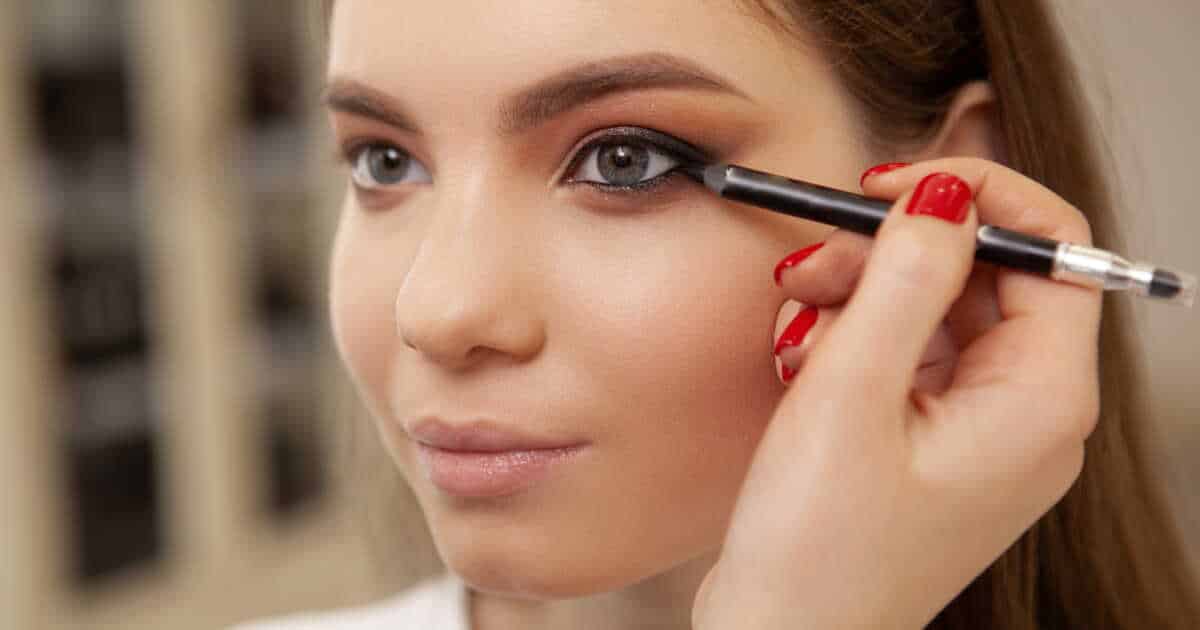
Step three is where the smoky effect truly begins: a dark pencil is used to draw an accent mark at the outer corner of the eye, shaped like a circumflex accent (^), then blended inward with a dense brush, with emphasis on the outer edge. This angular application immediately creates the illusion of a lifted outer corner, mimicking the feline eye shape associated with looks worn by Louane, who reportedly uses a similar technique "at least 30 times per evening."
Depth, gradient, and illumination
Step four involves placing black pencil inside the lower waterline and insisting on the outer corner, letting it slightly overflow onto the lower lashes. This is the step that elongates the eye horizontally and reinforces the feline angle. The fifth step adds a brown eyeshadow to the outer portion of the lid to create a gradient, softening the transition between the dark outer corner and the lighter inner lid.
Step six is the brightening move: light beige shadow is placed at the inner corner of the eye, beneath the brow arch, and right at the lash line. This triple placement illuminates the gaze, opens the inner corner, and lifts the brow area visually. The seventh and final step is mascara, applied to both upper and lower lashes to tie everything together.
Always blend upward and outward, never downward. On hooded or mature lids, every stroke of the brush should follow the direction you want the eye to travel — and that direction is always up.
The placement rules that make or break the result
Beyond the specific products and steps, Salvator's technique rests on a few non-negotiable principles of placement. Intensity must stay concentrated at the lash line, not spread across the lid. The moment dark product drifts too far from the lashes, it creates shadow where you don't want it and flattens the eye. Blending must be thorough, with particular attention to the outer corner, where harsh edges immediately read as heavy or dated.
Avoid placing too much dark product below the lower lash line or far from the roots of the lashes. This is the primary cause of the panda effect, which is both aging and visually closing on the eye.
The logic behind every step is directional: lift, elongate, illuminate. The cream textures do the technical work of staying in place without creasing. The upward blending does the structural work of counteracting lid heaviness. And the strategic use of light at the inner corner and under the brow does the finishing work of making the entire eye appear wider and more awake. Just as understanding the lasting power of beauty products matters in nail care, knowing how a formula behaves on your specific skin type is what separates a polished result from a frustrating one.
steps in Charly Salvator’s smoky eye method for drooping or mature eyelids
The full tutorial is available on TikTok under the hashtags #makeup, #tutomakeup, #makeupyeux, and #smokyeyes, set to "Liquid Echoes" by u_YanMusicRP. For anyone who has ever given up on the smoky eye because it seemed reserved for younger faces, this method makes a compelling case that the look belongs to anyone willing to rethink where the product goes, not abandon it altogether.