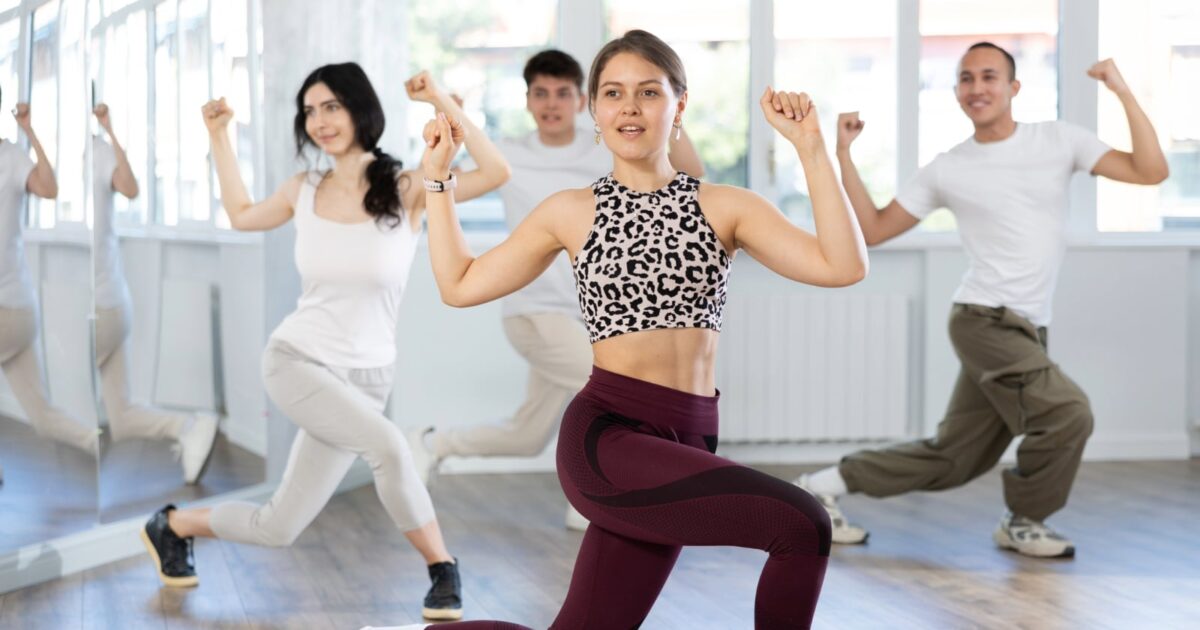
Zumba burns between 300 and 900 calories per hour while combining Latin dance rhythms with aerobic training. A 2012 scientific study confirmed it outperforms kickboxing, aerobics, and yoga in caloric expenditure over the same duration. And it genuinely feels more like a party than a workout.
There are fitness activities you drag yourself to, and there are those you actually look forward to. Zumba sits firmly in the second category. Born from Latin dance traditions and structured as an aerobic exercise, it has quietly built a reputation as one of the most enjoyable ways to transform your body — without the grim, grinding effort usually associated with serious calorie burning.
But beyond the fun factor, the numbers are striking. And the science backs them up.
Zumba burns more calories than most popular workouts
The clearest argument in favor of Zumba is purely metabolic. According to Presse Santé, a single one-hour session burns anywhere between 300 and 900 calories, depending on intensity and individual profile. That range is wide, but even the lower end holds up well against conventional alternatives.
A 2012 study put the figure under a microscope. Researchers observed 19 healthy women between 18 and 22 years old during a 39-minute Zumba session and measured their energy expenditure in real time. The result: 9.5 calories burned per minute, which translates to roughly 369 calories in 40 minutes. When compared directly to kickboxing, standard aerobics, and yoga over the same duration, Zumba came out ahead on every count.
calories burned per minute during a Zumba session (2012 study)
Why the caloric burn is so high
The secret lies in the structure of the activity itself. Zumba alternates between high-intensity bursts and lower-intensity recovery sequences, mimicking the principles of interval training. This constant variation keeps the heart rate elevated without allowing the body to fully settle into a comfortable rhythm. The Latin dance choreography — salsa, merengue, cumbia — demands full-body engagement, meaning the core, legs, and arms are all working simultaneously. That's a lot of muscle mass activated at once, which drives up the energy cost considerably.
The risk of adaptation
There is one catch worth knowing. The body is remarkably efficient at adapting to repeated stimuli. With consistent Zumba practice, the same routine progressively becomes less demanding as fitness improves. To keep the caloric burn at its peak, increasing intensity over time is necessary — whether through faster sequences, more complex choreography, or longer sessions.
A full-body workout with real health benefits
Calorie burning is the headline, but the physical benefits of Zumba extend well beyond weight management. Regular practice strengthens the core through the rotational and lateral movements inherent to Latin dance. Over time, practitioners typically notice marked improvements in flexibility, as the range of motion required by the choreography gradually increases.
Core strengthening, improved cardiovascular health, better movement coordination, enhanced flexibility, and a measurable boost in mood and energy levels.
Cardiovascular health improves significantly with sustained aerobic activity, and Zumba delivers on this front consistently. The heart works hard during an energetic session, and over weeks of regular practice, resting heart rate and overall cardiac efficiency tend to improve. Movement coordination is another underrated benefit — the rhythmic, multi-directional nature of the choreography trains the neuromuscular system in ways that jogging or cycling simply don't.
And then there's mood. This is not a minor footnote. Zumba has a documented positive impact on energy levels and emotional state, likely through the combined effect of aerobic exertion, music, and social engagement. For anyone whose relationship with exercise has historically been reluctant, that psychological dimension matters enormously. Much like dietary habits that support weight management without restriction, Zumba works best when it becomes something you genuinely want to do — not something you force.
How to practice Zumba effectively
Frequency and format
The recommended practice frequency is 2 to 3 times per week. That rhythm allows the body to recover adequately between sessions while maintaining enough regularity to see progressive results. Practicing more than three times a week without variation can accelerate the adaptation problem mentioned earlier.
As for where to practice, the options are genuinely flexible. Gyms offer structured classes with a live instructor, which helps with motivation and technique. But online video classes have made Zumba fully accessible at home, with a vast library of sessions ranging from beginner to advanced levels available across multiple platforms. The barrier to entry is low — all that's really needed is enough floor space to move freely.
Combining Zumba with other activities
To maximize long-term results and avoid the plateau that comes with repetition, alternating Zumba with complementary cardio activities is a smart approach. Brisk walking, jogging, and swimming all work well as counterparts, each engaging the cardiovascular system in slightly different ways and challenging different muscle groups.
Nutrition plays its part too. No aerobic workout, however intense, fully compensates for a diet that works against the body's goals. Pairing Zumba sessions with balanced eating habits amplifies the results considerably. The combination of consistent movement and thoughtful nutrition is where real, lasting change happens.
To prevent your body from adapting too quickly to Zumba, vary the intensity of your sessions and alternate with other cardio exercises like swimming or jogging at least once a week.
What makes Zumba genuinely compelling is that it doesn't ask you to choose between effectiveness and enjoyment. The 2012 study data is clear: nearly 370 calories in under 40 minutes, outperforming some of the most popular fitness formats on the market. And unlike many workouts that demand discipline to sustain, Zumba tends to generate its own momentum. The music pulls you in, the choreography keeps you engaged, and before long, the session is over — and your body has done far more work than it felt like. That's a rare combination in fitness, and it's exactly why this Latin-inspired aerobic workout has endured for decades.