The signet ring is back — and it never really left. Once a symbol of noble lineage and masculine authority, this flat-topped band has been fully reclaimed by the fashion world in 2026, reimagined in playful, unisex, and deeply personal forms. Chances are, one is already waiting for you in a forgotten drawer.
Fashion has a long memory. Trends that disappear for a generation have a way of resurfacing with renewed energy, and the signet ring is the perfect proof of that cycle. What was once your grandmother's heirloom, or a dusty relic from a great-uncle's jewelry box, is now the most coveted piece on the fingers of the style-conscious. And the best part? You might already own one.
The timing makes sense. The rise of vintage shopping and secondhand jewelry has created the ideal conditions for old pieces to reclaim their relevance. When people dig through estate sales, inherited boxes, or the back of a wardrobe shelf, they're not just hunting for nostalgia — they're finding genuinely wearable jewelry that fits perfectly into today's aesthetic. The signet ring sits right at the intersection of that rediscovery.
The signet ring has a history longer than most jewelry trends
To understand why this ring keeps coming back, it helps to know where it started. The signet ring traces its origins to ancient Egypt, where it served a very practical administrative purpose: the flat top, or bezel, was engraved with a personal seal and used to authenticate documents and mark property. Authority, identity, and ownership were literally worn on the hand.
From aristocratic seal to bourgeois accessory
Through the Middle Ages, the signet ring became a marker of nobility. Aristocratic families had their coats of arms engraved on the bezel, transforming the ring into a portable declaration of lineage. By the Renaissance, it had filtered down to the bourgeoisie, becoming a symbol of social standing for a broader — though still privileged — class. For centuries, it remained largely a masculine accessory, worn on the little finger as a sign of rank and heritage.
That gendered tradition held for a long time. But 2026 has effectively dissolved it. The signet ring is no longer reserved for men, no longer confined to the pinky, and no longer expected to carry a family crest. It belongs to whoever wants to wear it.
Designers are reinventing the signet ring for a new generation
The contemporary signet ring looks nothing like its austere ancestors — and everything like them at the same time. The silhouette is recognizable: that distinctive flat top, the substantial presence on the finger. But what sits on that bezel has changed entirely.
Pascale Monvoisin has leaned into romance, offering a version adorned with a heart motif that feels intimate without being saccharine. Roxanne First went the opposite direction — maximalist and irreverent, with a smiley face set in sapphires and diamonds, turning fine jewelry into something almost playful. Cabirol pushed the color dial all the way with a hot pink version that reads as a deliberate provocation against the ring's historically somber palette. And Sigal kept things more wearable with a colored stone set into the bezel, bridging the gap between classic proportion and modern sensibility.
You don’t need to buy new. Many vintage and secondhand signet rings are circulating through estate sales, thrift stores, and online resale platforms — often at a fraction of the cost of a new piece, and with far more character.
What all these designs share is an intentional departure from the idea that a signet ring must be serious. Jewelry designers have understood that today's wearer wants pieces that reflect personality, not pedigree. The personalization angle is particularly strong: a ring you can make your own, whether through engraving, stone choice, or simply the way you style it, hits a very specific desire that defines jewelry culture right now.
How to wear the signet ring in 2026
The old rules are gone. There is no prescribed finger, no dress code requirement, no family obligation attached to wearing a signet ring today. That freedom is exactly what makes it so appealing to a generation that has grown wary of rigid style directives.
Stacking is the dominant styling move
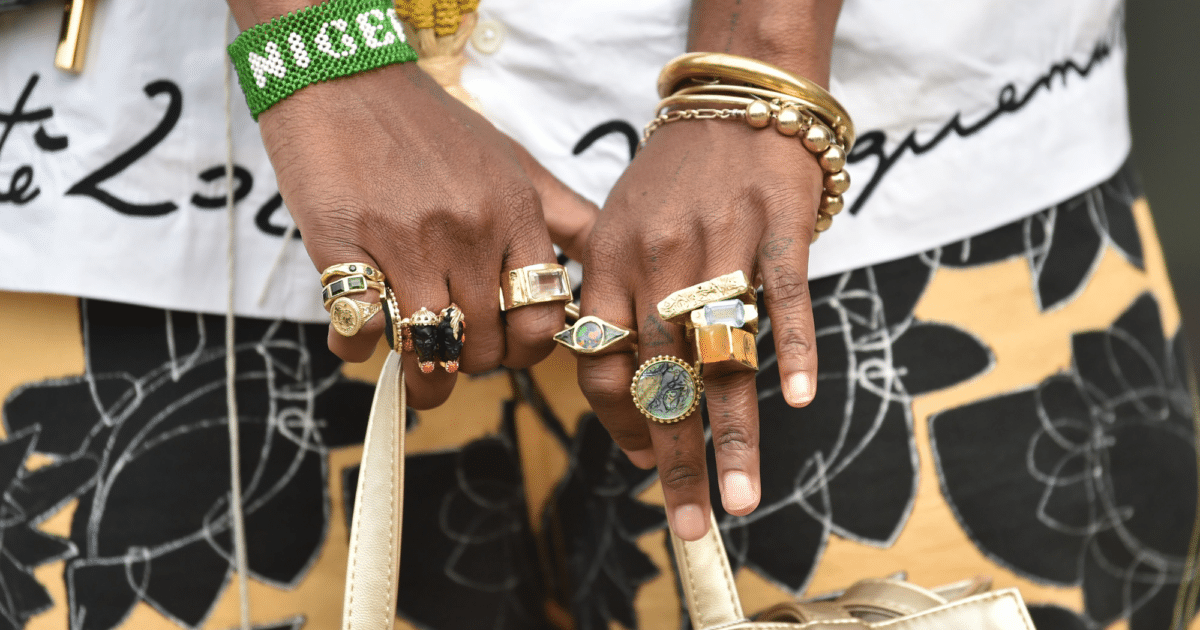
The most photographed way to wear a signet ring right now is stacked. Layering it with thinner bands, delicate chains worn as rings, or even another signet in a contrasting metal creates a curated, collected look that feels personal rather than coordinated. The signet ring's flat top and architectural shape actually makes it an ideal anchor piece in a stack — it provides visual weight without competing with finer rings around it. This pairs beautifully with other hand-focused beauty trends, like the striped manicure that's defining spring 2026, where the nails and rings become part of the same deliberate composition.
The vintage route is just as valid
Not everyone needs to buy into the trend through a new designer piece. The secondhand and vintage market has made it easier than ever to find signet rings with genuine history behind them. A ring that belonged to a family member carries something no new piece can replicate: a story. And right now, that story is exactly what makes jewelry interesting.
- Versatile across fingers and styling approaches
- Available new or vintage, at every price point
- Works as a standalone statement or stacked with other rings
- Deeply personalizable through engraving or stone choice
- The flat bezel can feel bulky on very slender fingers
- Designer versions with precious stones carry a significant price tag
- Vintage pieces may require resizing before wearing
If you haven't already, it's worth opening that old jewelry box sitting in the back of a closet shelf. Family heirlooms that seemed outdated a decade ago may look completely current today. The same cyclical logic that brought certain nail trends back into rotation applies to jewelry: what goes around comes back, usually at exactly the right moment.
The signet ring's return isn't about nostalgia for its own sake. It's about a broader shift toward jewelry that means something, that has weight in both the literal and metaphorical sense, and that resists the disposability of fast fashion. Whether you track one down at a vintage fair, inherit one from a relative, or invest in a new piece from a designer who's rethought the format entirely, the signet ring in 2026 is a rare thing: a trend with genuine staying power.